



If you’ve been running Facebook ads the same way you did a year ago, there’s a good chance things aren’t working like they used to. Results feel slower, costs seem higher, and what once worked now feels inconsistent.
And honestly, that’s not your fault.
Meta has changed a lot—especially in how targeting, optimization, and AI work behind the scenes. The platform is smarter now, which means old tactics don’t perform the same way anymore.
Things like over-targeting or simply boosting posts might have worked before, but today they often limit your results instead of improving them.
But here’s the good news—Facebook ads still work. Very well, in fact.
You just need to adjust your approach to match how the system works now.
In this guide, we’ll walk through a simple, updated Facebook ads strategy for small businesses in 2026—based on what’s actually working today, not outdated methods.
What Changed in Meta Ads (2026 Reality)
Meta’s advertising system is now heavily driven by AI, and that has changed how campaigns perform in a big way. Instead of relying on manual control, the platform now uses data and machine learning to decide who sees your ads and when.
That shift means your old strategies might not work like before—even if they used to perform well.
Today, the system works best when you give it the right signals and let it optimize on its own. Here’s what that looks like in practice:
- It prefers clear campaign objectives so it knows exactly what result to optimize for
- It performs better with broader but still relevant audiences, instead of narrow targeting
- It relies heavily on data from your Pixel and conversion events to improve performance over time
In simple terms, you don’t need to control everything anymore—you need to guide the system properly.
When you do that, Meta’s AI can actually work in your favor and deliver better, more consistent results.
Start With the Right Objective (More Important Than Ever)
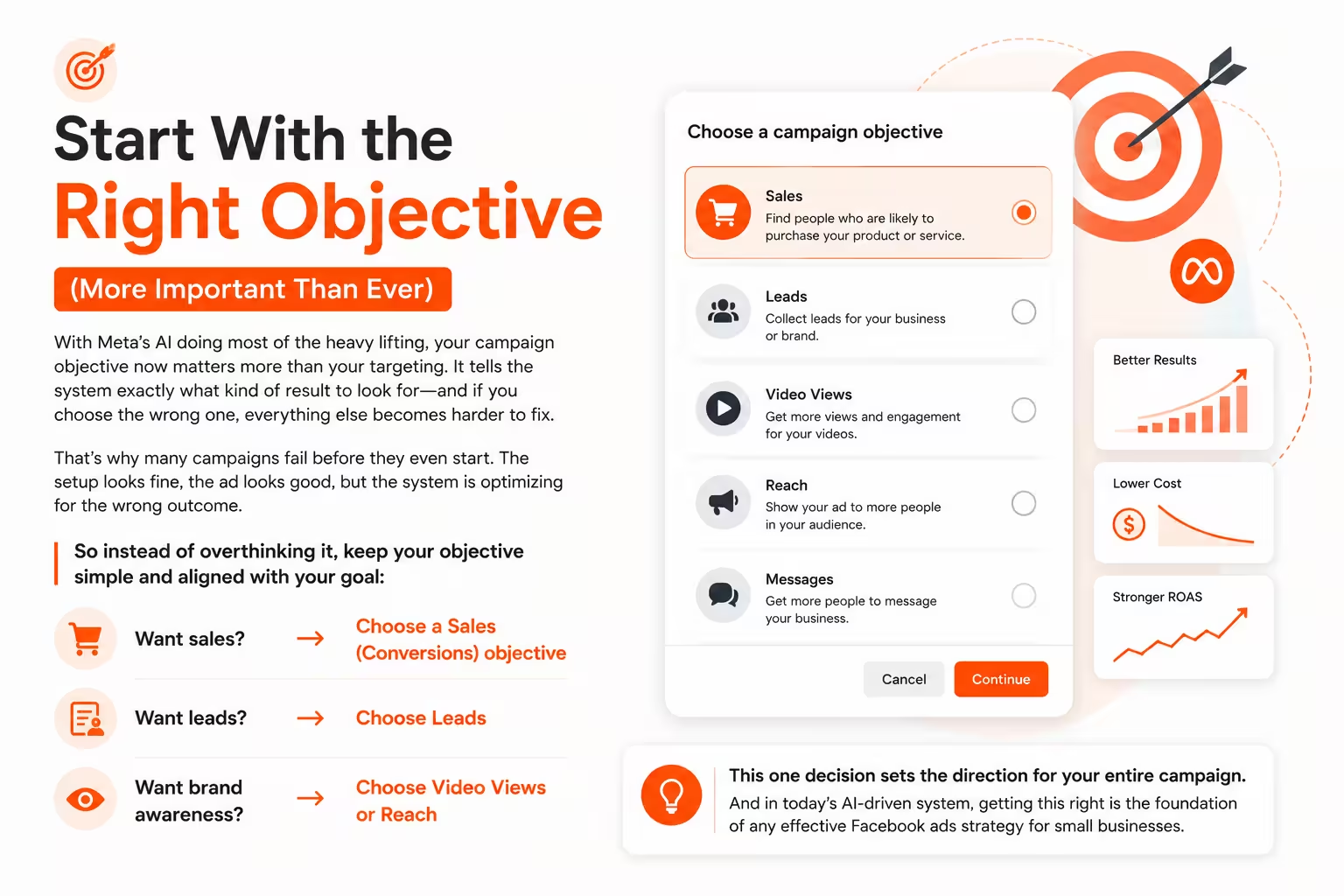
With Meta’s AI doing most of the heavy lifting, your campaign objective now matters more than your targeting. It tells the system exactly what kind of result to look for—and if you choose the wrong one, everything else becomes harder to fix.
That’s why many campaigns fail before they even start. The setup looks fine, the ad looks good, but the system is optimizing for the wrong outcome.
So instead of overthinking it, keep your objective simple and aligned with your goal:
- Want sales? → Choose a Sales (Conversions) objective
- Want leads? → Choose Leads
- Want brand awareness? → Choose Video Views or Reach
This one decision sets the direction for your entire campaign.
And in today’s AI-driven system, getting this right is the foundation of any effective Facebook ads strategy for small businesses.
Also Read about – Facebook Ads Getting Clicks But No Sales? Let’s Talk Honestly
Broad Targeting + Smart Signals (The New Approach)
In the past, Facebook ads worked best when you narrowed your audience as much as possible. The idea was simple—be specific and target only the “perfect” people.
But in 2026, that approach has changed.
Meta’s AI now performs better when you give it room to learn and optimize. Instead of over-restricting your audience, the system needs enough data and flexibility to find the right people on its own.
That’s why broader targeting, combined with strong data signals, is now the better approach.
Here’s what works best today:
- A reasonably broad audience that gives the algorithm space to optimize
- Strong data signals from your Pixel and conversion events
- An audience size in the range of around 2M–10M for most campaigns
Instead of over-filtering, keep things simple and focused:
- Target the right location
- Use a few relevant interests (if needed)
- Let the algorithm learn and improve over time
This shift—from tight control to guided automation—is one of the biggest changes in Facebook ads targeting in 2026.
Your Data Matters More (Pixel + Conversions API)
Meta’s system now relies heavily on data to make decisions. The more accurate data you give it, the better it can find people who are likely to convert.
If your tracking isn’t set up properly, your ads won’t improve—no matter how good your creative or targeting is.
That’s why having the right tracking foundation is no longer optional. It’s essential.
At a minimum, you should have:
- The Facebook Pixel installed correctly on your website
- Key conversion events set up, such as Purchase, Lead, or Add to Cart
If you want better accuracy and more reliable tracking, it’s also worth adding:
- Conversions API (CAPI), which helps capture data even when browser tracking is limited
When your data is clean and consistent, Meta’s AI has something to learn from. It can optimize faster, improve targeting, and deliver better results over time.
Without that data, the system is basically guessing.
And when Meta is guessing, your budget gets wasted.
Retargeting Still Wins (And Always Will)
Even with all the AI improvements in Meta ads, one thing hasn’t changed—warm audiences convert better.
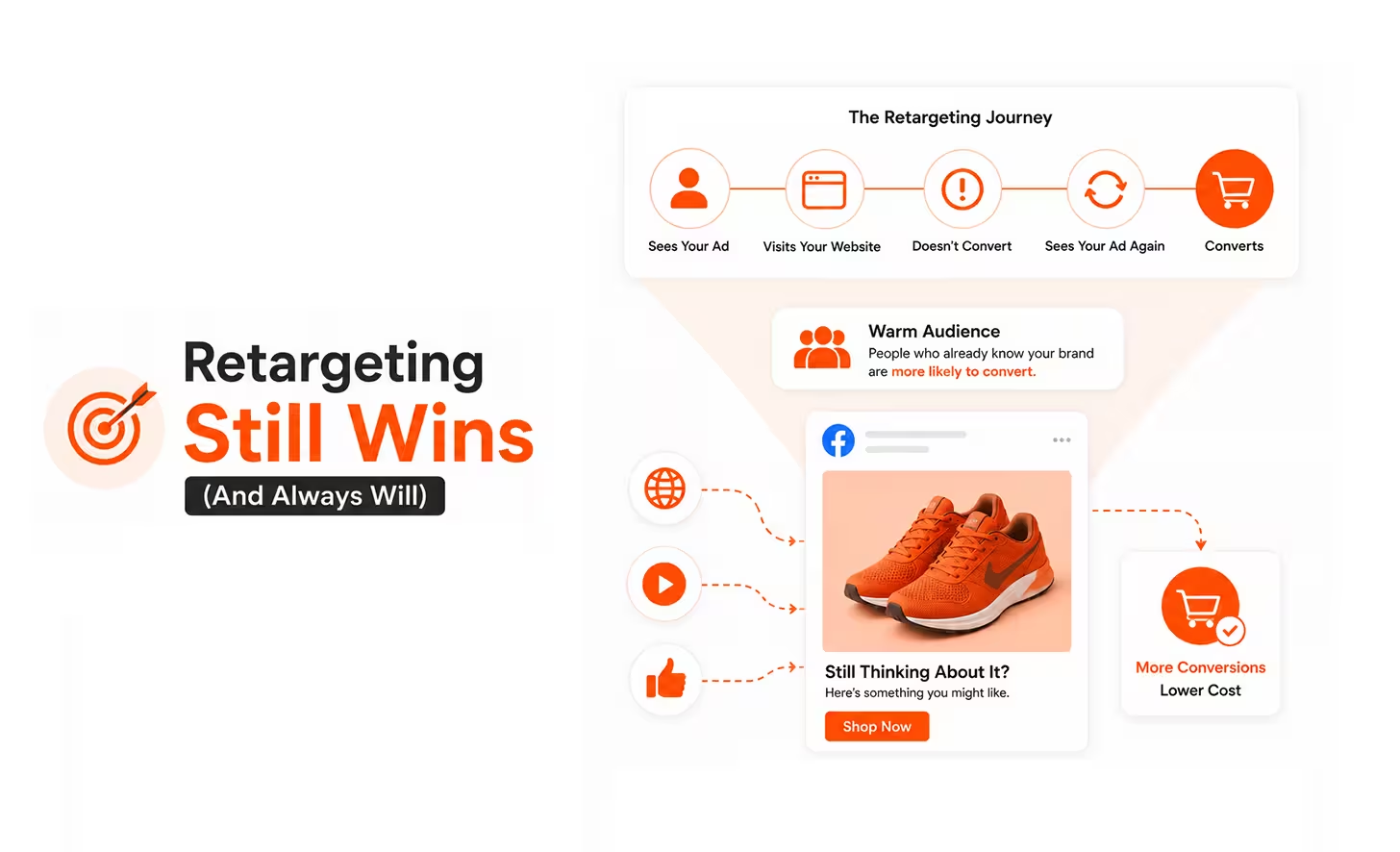
People who already know your brand are far more likely to take action compared to someone seeing you for the first time. They’ve already shown interest, which means less friction and more trust.
That’s why retargeting continues to be one of the most powerful parts of any Facebook ads strategy.
You should always retarget people who have already interacted with your business, such as:
- Website visitors who didn’t convert
- Video viewers who watched your content
- People who engaged with your ads or social media
These audiences are already familiar with you, so they require less convincing.
And in most cases, this is where your lowest-cost conversions come from.
Because you’re not starting from zero—you’re continuing the conversation.
Video-First Strategy (Short & Simple)
Meta is putting a strong focus on short-form video, and that’s where most attention is going right now. If you’re not using video in your ads, you’re likely missing out on both reach and engagement.
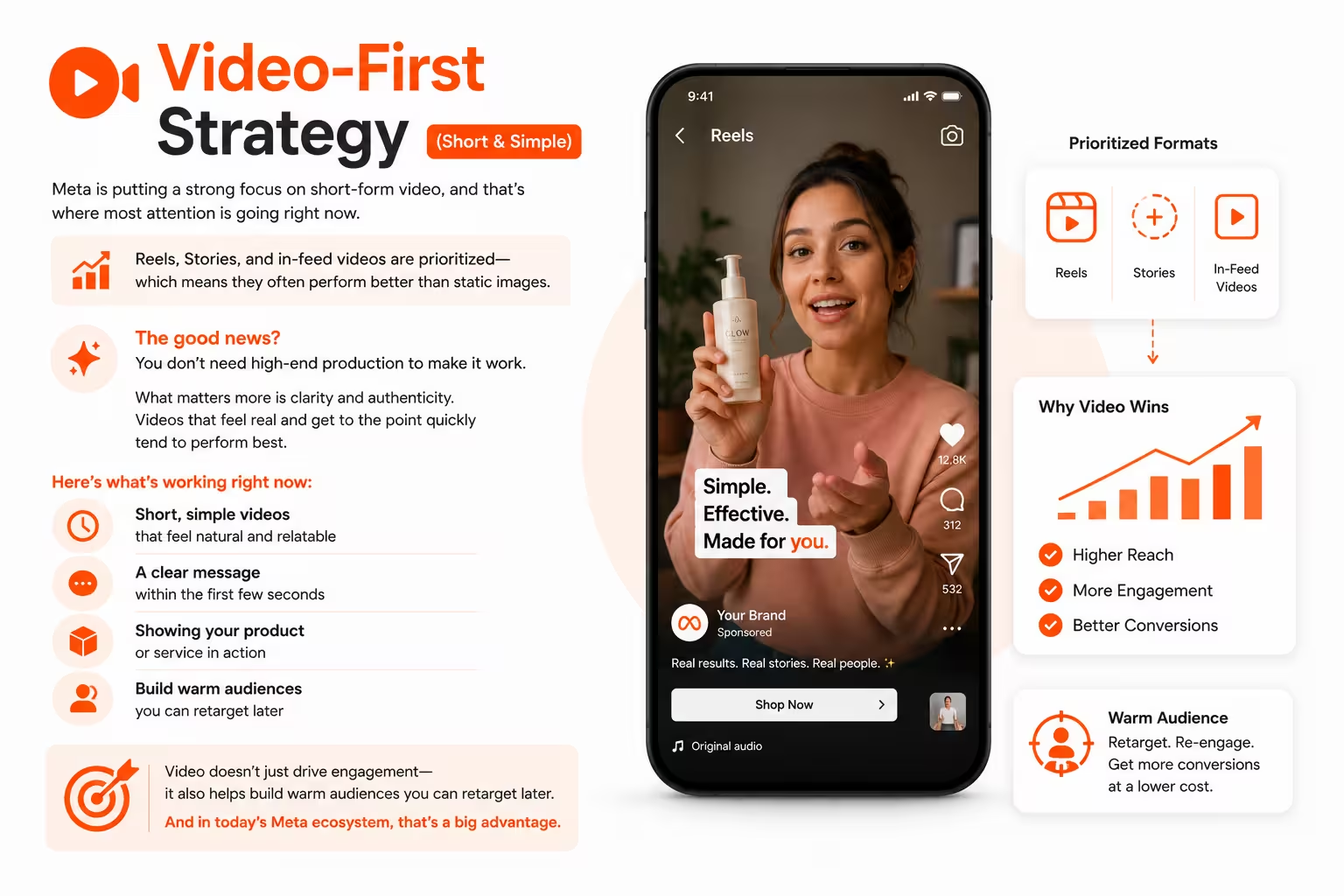
Formats like Reels, Stories, and in-feed videos are being prioritized, which means they often perform better than static images.
The good news? You don’t need high-end production to make it work.
What matters more is clarity and authenticity. Videos that feel real and get to the point quickly tend to perform best.
Here’s what’s working right now:
- Short, simple videos that feel natural and relatable
- A clear message within the first few seconds
- Showing your product or service in action
Video doesn’t just drive engagement—it also helps build warm audiences you can retarget later.
And in today’s Meta ecosystem, that’s a big advantage.
Learn More About – Facebook Ads Not Converting? Let’s Fix What’s Really Going Wrong
Creative > Targeting (The Big Shift)
One of the biggest changes in Meta ads is simple but powerful—your ad creative now matters more than detailed targeting.
In the past, success often came from narrowing down the “perfect” audience. But today, Meta’s AI handles most of that work. What it needs from you is strong creative that clearly communicates your message.
Because in the end, your creative is what stops the scroll, grabs attention, and tells the algorithm who should see your ad.
Instead of overthinking audiences, focus on what people actually see:
- Better visuals that stand out in the feed
- Clear, simple messaging that’s easy to understand
- Strong hooks that capture attention in the first few seconds
When your creative is strong, Meta can do its job more effectively. It learns faster, optimizes better, and finds the right people automatically.
And that’s the shift—less manual control, more creative impact.
Use a Simple Funnel (Still Works Best)
Even with all the AI improvements, one thing hasn’t changed—human behavior. People don’t make decisions instantly. They need time to understand your offer, build trust, and feel ready to take action.
That’s why a simple funnel still works better than trying to sell everything in one step.
Instead of pushing for immediate results, guide people through a clear journey:
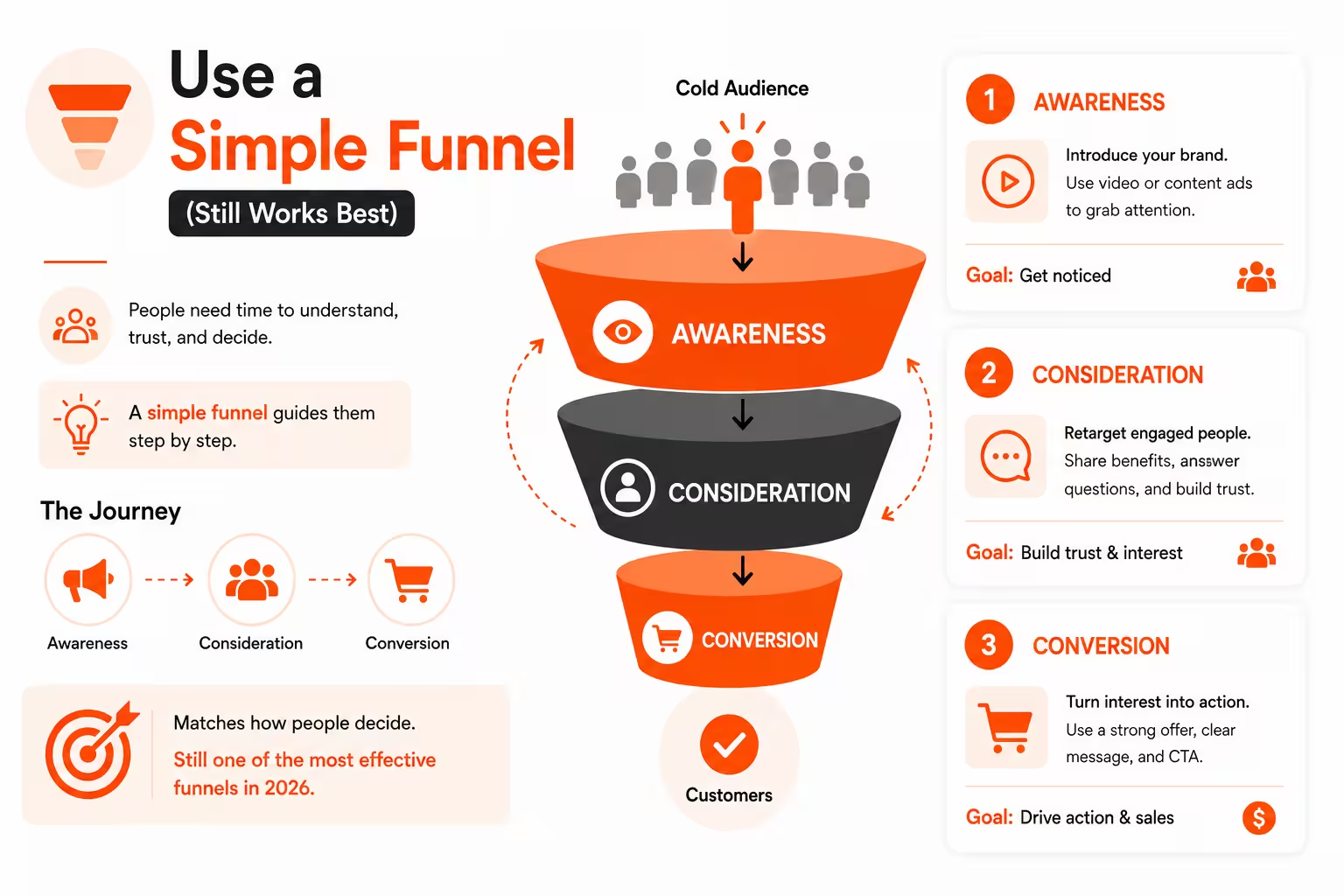
1. Awareness
Start by introducing your brand. Use video or content-based ads to grab attention and show what you offer in a simple, engaging way.
2. Consideration
Next, retarget people who have already interacted with your content. This is where you explain benefits, answer questions, and build trust using proof or real value.
3. Conversion
Finally, focus on turning that interest into action. Use a strong offer, clear messaging, and a simple call-to-action that tells people exactly what to do next.
This step-by-step approach works because it matches how people actually make decisions.
And even in 2026, this remains one of the most effective Facebook ads funnels for small businesses.
Budget Strategy (Keep It Stable)
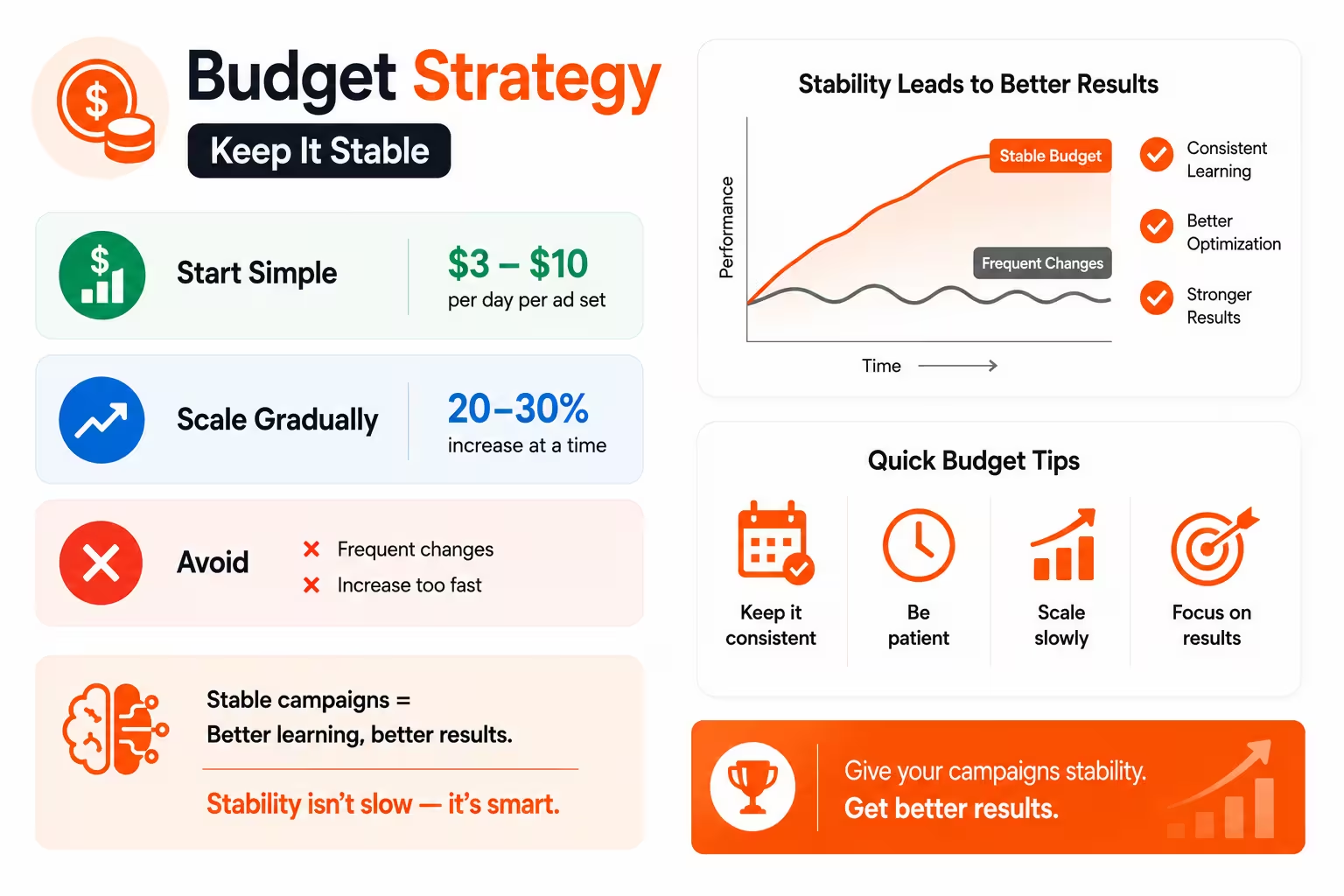
When it comes to Facebook ads in 2026, stability matters more than aggressive scaling. Meta’s system needs time and consistency to learn what’s working, and frequent changes can reset that learning process.
That’s why starting simple is often the best approach. Instead of overcomplicating your budget, focus on giving each ad set enough room to perform and gather data.
A good starting point for most small businesses is:
- Around $3–$10 per day per ad set
Once you start seeing results, the key is to scale gradually—not all at once.
- Increase your budget slowly, usually by 20–30% at a time
What you want to avoid is just as important:
- Making frequent changes that disrupt performance
- Increasing budgets too quickly, which can confuse the algorithm
When your campaigns stay stable, Meta’s AI can learn faster, optimize better, and deliver more consistent results.
Because in this system, stability isn’t slow—it’s smart.
Test Smart (Don’t Confuse the Algorithm)
Testing is essential if you want to improve your Facebook ads—but how you test matters just as much as what you test.
A common mistake is changing too many things at once. When you do that, Meta’s system can’t figure out what’s actually working, and your results become inconsistent.
Instead, keep your testing simple and controlled. Focus on one variable at a time so you can clearly see what’s making a difference.
Here’s a smarter way to test:
- Test one element at a time, such as creative, headline, or audience
- Keep everything else stable while testing that one change
- Let your ads run long enough to gather meaningful data before making decisions
This approach gives the algorithm time to learn and optimize properly.
Because in 2026, improving Facebook ads performance isn’t about constant changes—it’s about making the right changes, at the right time.
Best Ad Formats Right Now
Choosing the right ad format can make a big difference in how your campaign performs. Meta is prioritizing certain placements more than others, so using the right format helps you get better reach, engagement, and results.
Instead of using the same format for everything, match your ad type with your goal.
Here’s what’s working best right now:
- Reels Ads – High reach and strong engagement, especially for short-form video content
- Stories Ads – Great for grabbing quick attention with simple, direct messaging
- Carousel Ads – Ideal for showcasing multiple products or highlighting key features step by step
- Lead Ads – Perfect for service-based businesses looking to collect inquiries without sending users off-platform
Each format has its own strength, so the key is to use them strategically based on what you want to achieve.
Because when your format matches your goal, your ads perform more efficiently.
Common Mistakes After Meta Updates
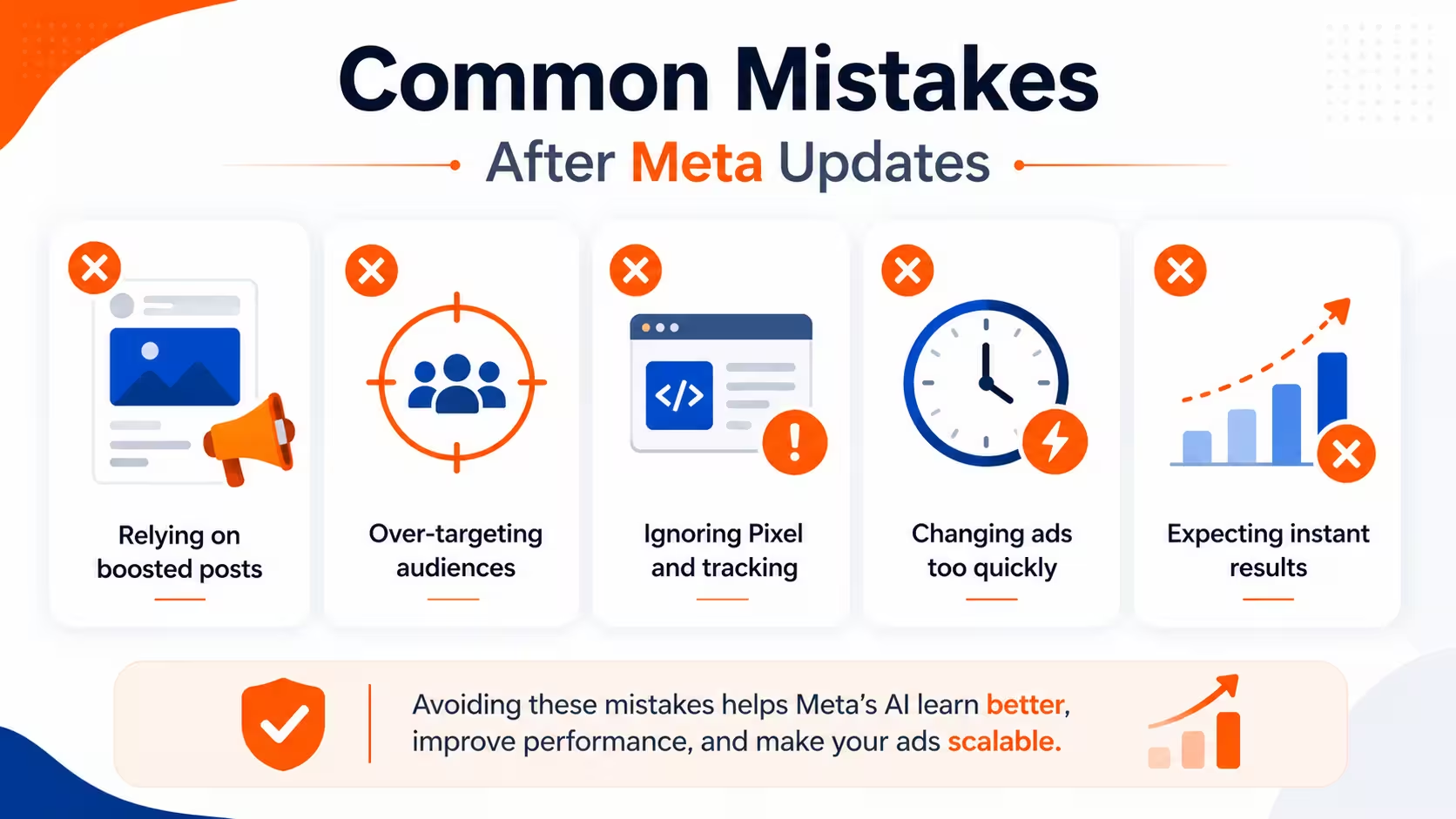
After all the changes in Meta’s system, many businesses are still using old habits that no longer work the same way.
The problem isn’t always what you’re doing—it’s that the platform has changed, but the strategy hasn’t.
These mistakes might seem small, but they can quietly slow down your performance and waste your budget over time.
Here are some of the most common ones to avoid:
- Relying on boosted posts instead of proper campaign setup
- Over-targeting audiences and limiting the algorithm
- Ignoring Pixel and data tracking, which weakens optimization
- Changing ads too quickly without giving them time to learn
- Expecting instant results without testing and refinement
Each of these issues disrupts how Meta’s AI learns and optimizes your campaigns.
And when the system can’t learn properly, your results stay inconsistent.
Avoiding these mistakes won’t just improve performance—it will make your ads more stable and scalable over time.
How BrandXpart Helps You Adapt
Most small businesses don’t struggle because Facebook ads don’t work—they struggle because they’re still using outdated strategies in a system that has already changed.
What worked before doesn’t always work now, especially with how Meta’s AI and optimization have evolved.
At BrandXpart, the focus isn’t just on running ads. It’s about helping you adapt to how the system actually works today—so your campaigns perform the way they should.
Here’s what that looks like in practice:
- Adjusting your strategy based on Meta’s latest updates and AI behavior
- Building campaigns backed by real data, not guesswork
- Creating simple, conversion-focused funnels that guide users step by step
- Making sure your budget is used efficiently to generate real results
Because at this point, it’s not about hacks or quick tricks.
It’s about understanding how the system works—and using it the right way.
Conclusion
Facebook ads in 2026 are smarter than ever. But with that, they also require a smarter, more structured approach.
The good news is—you don’t need complicated strategies to make them work. You just need to align with how Meta’s system operates today.
When you focus on the right fundamentals, everything becomes easier and more predictable. That means:
- Choosing a clear campaign objective
- Using strong, scroll-stopping creative
- Feeding the system with good, reliable data
- Testing consistently without overcomplicating things
When these pieces come together, results start to follow.
Because at the end of the day, success with Facebook ads isn’t about doing more—it’s about doing the right things, consistently.
Ready to Update Your Ads Strategy?
If your ads aren’t performing like before, it’s time to stop guessing and start fixing what’s actually holding them back.
You don’t need more budget—you need a better system.
Don’t waste your money on outdated strategies.
Make it happen working with BrandXpart—and turn your ads into real results.