
If your website is not ranking on Google, it’s not because Google is ignoring you—it’s because something important is missing or broken. This is one of the most common problems for businesses in Bangladesh. You launch a website, publish a few pages, maybe even add a blog, but weeks or months later there is no traffic, no visibility, and no leads.
The truth is simple: Google does not rank websites automatically. It ranks websites that are clear, helpful, trustworthy, and technically sound. In this fully optimized guide, you’ll learn why your website is not ranking on Google, how Google evaluates websites today, and what actually works to fix ranking issues—based on real SEO experience from BrandXpart.
Why Is My Website Not Ranking on Google?
Most websites fail to rank on Google due to indexing issues, wrong keyword targeting, technical SEO problems, low-quality or thin content, lack of backlinks, and missing local SEO signals. Fixing these issues systematically allows Google to understand, trust, and rank your website over time.
How Google Decides Which Websites Rank
Google’s job is to show users the best possible answer to their search. To do that, it evaluates every website using automated systems that focus on three core areas:
- Relevance – Does your page clearly answer the search query?
- Authority – Is your website trustworthy compared to others?
- Technical health – Can Google crawl, index, and load your site easily?
If your website is weak in even one of these areas, it will struggle to rank—no matter how attractive it looks.
Why Google Can’t Find or Index Your Website
Google cannot rank pages it cannot see. One of the biggest reasons websites don’t rank is because Google has trouble crawling or indexing their pages. This is especially common for new websites or sites built without SEO planning.
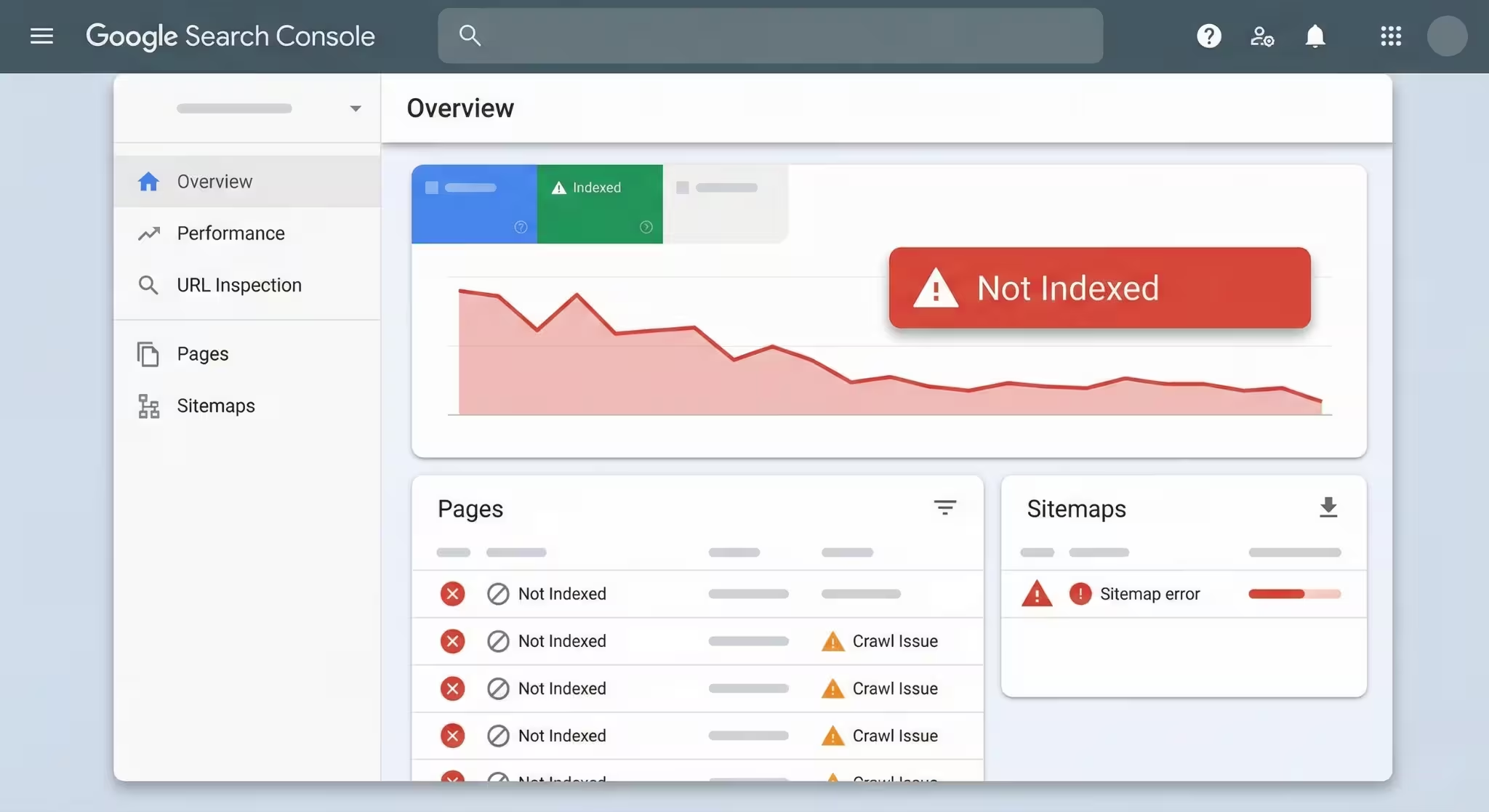
Indexing problems usually happen when:
- Important pages are blocked by robots.txt
- XML sitemaps are missing or incorrect
- Pages are marked “noindex” accidentally
- Internal links are weak or confusing
When indexing issues exist, your website may technically be online, but it’s invisible in search results. Once you properly configure Google Search Console, submit a clean sitemap, and fix crawl barriers, Google can finally evaluate your content for ranking.
Targeting the Wrong Keywords Is a Silent Ranking Killer
Many businesses in Bangladesh target keywords that are too broad or too competitive. Keywords like “SEO service” or “digital marketing” are dominated by global brands and long-established companies. Competing for them without authority is unrealistic.
The real problem isn’t traffic volume—it’s search intent. Ranking for keywords that don’t match how users actually search leads to poor visibility and low conversions.
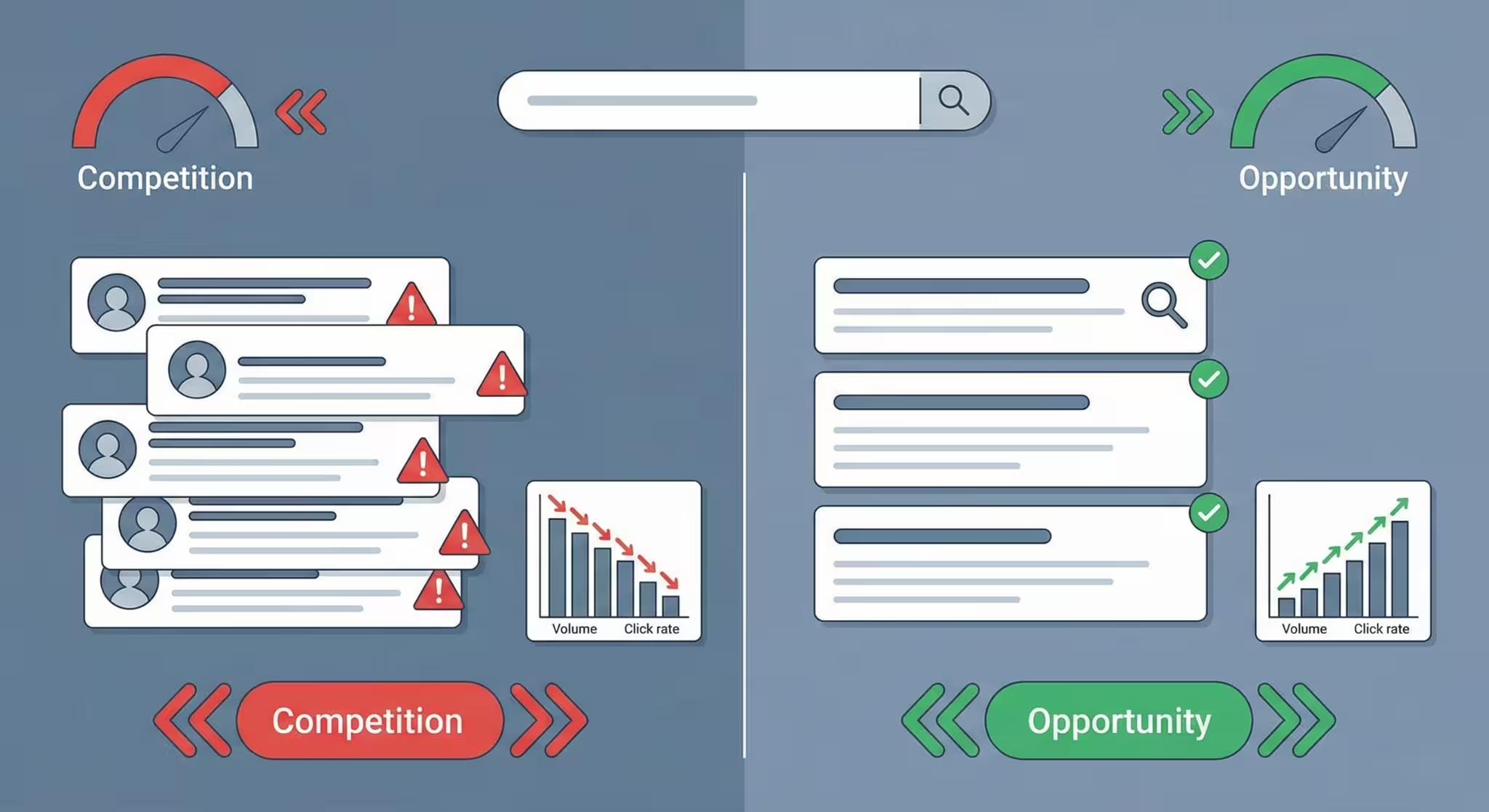
Websites that rank successfully focus on:
- Location-based keywords
- Service-specific phrases
- Problem-driven search queries
When your content aligns with what users truly want—and where they are—Google finds it easier to rank your pages.
Technical SEO Problems That Block Rankings
Even the best content cannot perform if your website has technical issues. Google prioritizes user experience, and technical SEO is how it measures that experience.
Common technical SEO issues include:
- Slow page loading speed
- Poor mobile usability
- Broken internal links
- Messy site structure
- Missing HTTPS security
These problems hurt Core Web Vitals, which directly influence rankings. Fixing them improves both user satisfaction and Google’s ability to crawl your site efficiently. In many cases, technical optimization alone leads to noticeable ranking improvements.
Content That Exists but Doesn’t Deserve to Rank
Not all content is equal. Google now rewards helpful, people-first content that demonstrates experience and depth. Many websites publish short, generic, or copied articles and expect results—but Google filters these out.
Low-ranking content often:
- Covers topics superficially
- Repeats information found everywhere else
- Uses AI-generated text without real insight
- Fails to answer specific user questions
Content that ranks well:
- Solves a clear problem
- Explains the topic thoroughly
- Uses logical headings and structure
- Includes FAQs and practical examples
- Reflects local relevance where applicable
When users stay longer, scroll, and engage, Google sees strong usefulness signals.
Lack of Authority and Trust Signals
Authority tells Google whether your website deserves to rank above competitors. Backlinks—links from other websites to yours—remain one of the strongest authority signals.
Websites struggle when they:
- Have no backlinks
- Rely on spammy or paid links
- Use irrelevant directories or PBNs
Effective authority building focuses on:
- Earning links from real, relevant websites
- Building local citations
- Publishing content worth referencing
Authority grows gradually, but once established, it significantly boosts ranking potential.
Ignoring Local SEO in Bangladesh
For businesses serving Dhaka or other areas in Bangladesh, local SEO is essential. Without it, Google doesn’t clearly understand where your business operates.
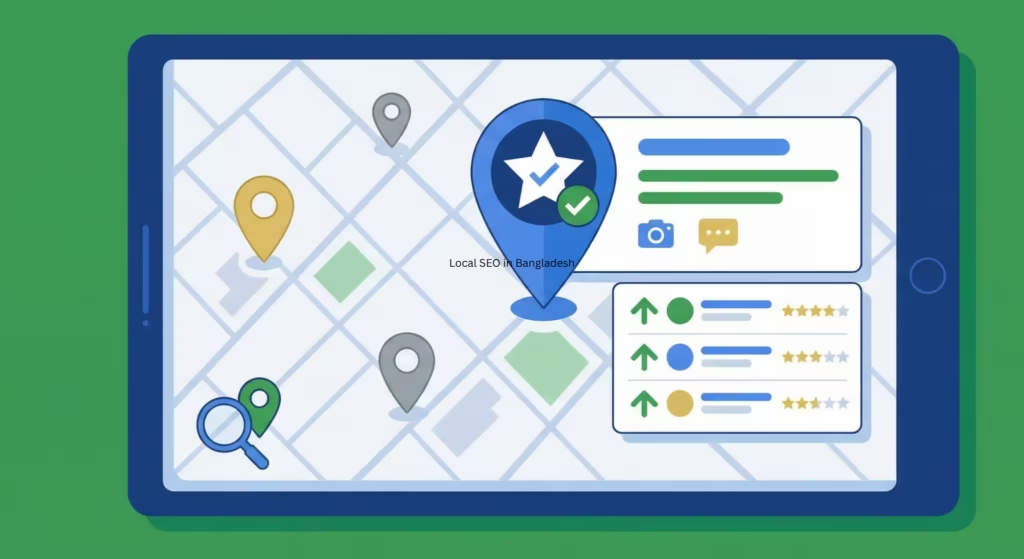
Local SEO problems usually include:
- No Google Business Profile optimization
- Inconsistent business name, address, and phone number
- No location-based keywords
- No local content or schema markup
Proper local SEO helps your website appear in Google Maps, local packs, and “near me” searches—often the highest-converting traffic sources.
SEO Takes Time (And That’s Normal)
SEO is not instant, and expecting quick results is one of the biggest mistakes website owners make. Google needs time to evaluate changes, reassess trust, and compare your site with competitors.
A realistic SEO timeline looks like this:
- First 1–2 months: Fixes and foundation
- Months 3–4: Ranking movement
- Months 5–6: Strong keyword positions
Consistency during this period is critical. Shortcuts usually lead to penalties, not rankings.
The Real Advantage: Consistency Over Time
Websites that rank consistently aren’t using secrets—they’re consistent. Google favors websites that are regularly updated, maintained, and improved.
Consistency includes:
- Updating existing content
- Publishing new helpful articles
- Monitoring Search Console data
- Refining technical and on-page SEO
- Continuing ethical link building
Over time, this steady approach builds trust and long-term visibility.
How to Fix a Website That Is Not Ranking on Google (Step-by-Step)
To improve rankings, SEO must be systematic—not random.
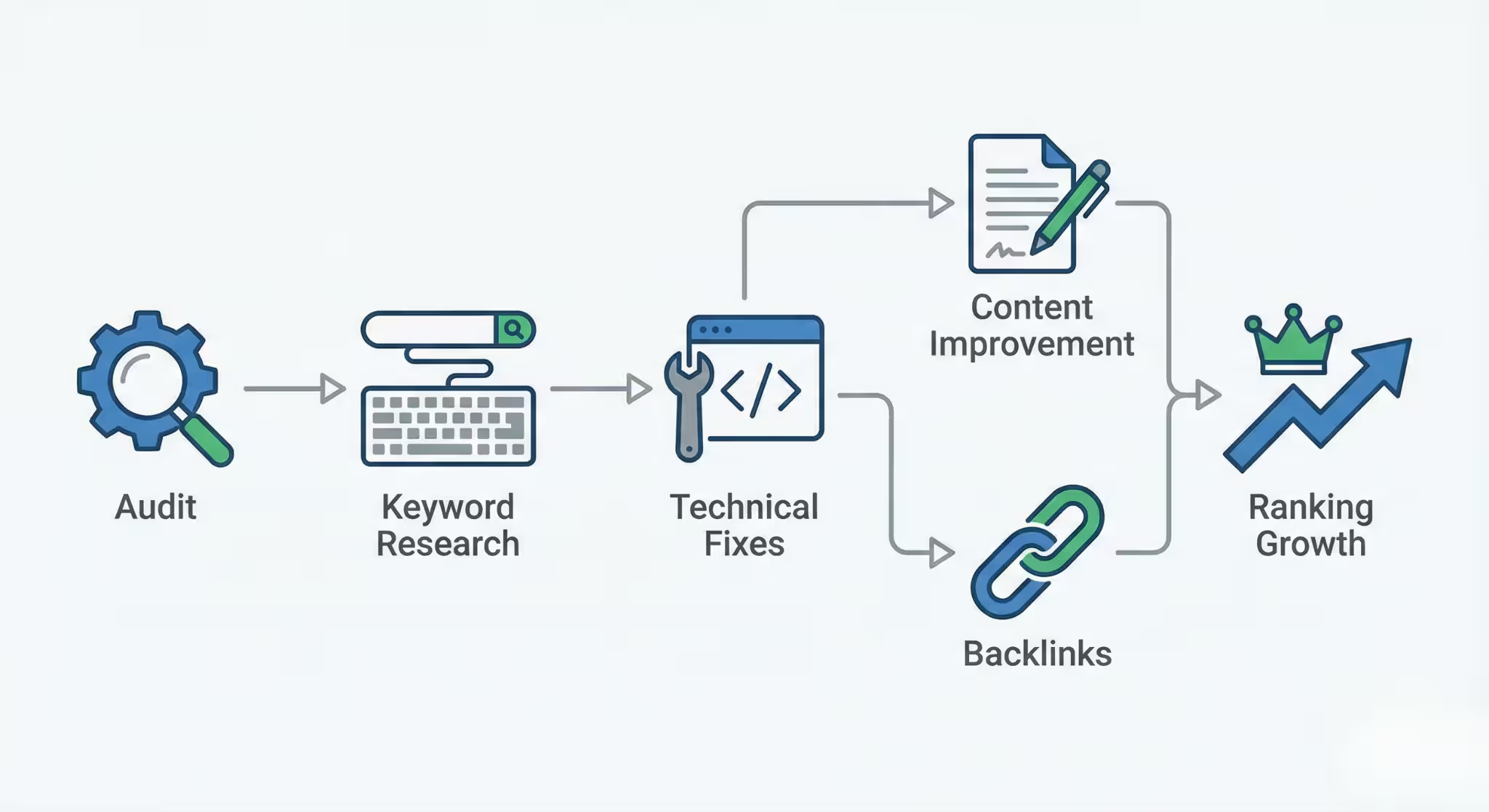
- Ensure all important pages are indexed
- Research keywords with real search intent
- Fix technical and performance issues
- Improve content depth and clarity
- Build relevant backlinks
- Optimize for local SEO
- Track performance and refine consistently
This process aligns directly with how Google evaluates websites.
Frequently Asked Questions
Why is my website not showing on Google?
Most often due to indexing problems, weak content, or lack of authority.
How long does SEO take in Bangladesh?
Typically 3–6 months, depending on competition and consistency.
Can a new website rank on Google?
Yes, by targeting low-competition keywords and building trust gradually.
Do I need an SEO agency?
Not always, but professional SEO reduces mistakes and speeds up results.
Final SEO Takeaway
If your website is not ranking on Google, the issue is rarely design or luck. It’s usually missing SEO fundamentals—indexing, intent-driven keywords, technical health, helpful content, authority, and local relevance.
Based on hands-on SEO experience with Bangladeshi businesses, these issues appear repeatedly and require structured solutions, not shortcuts. When addressed correctly, SEO becomes a powerful long-term growth channel.
If you want to stop guessing and start ranking, a professional SEO audit can show you exactly what’s holding your website back—and how to fix it.
Your website should be an asset, not a hidden page on Google.